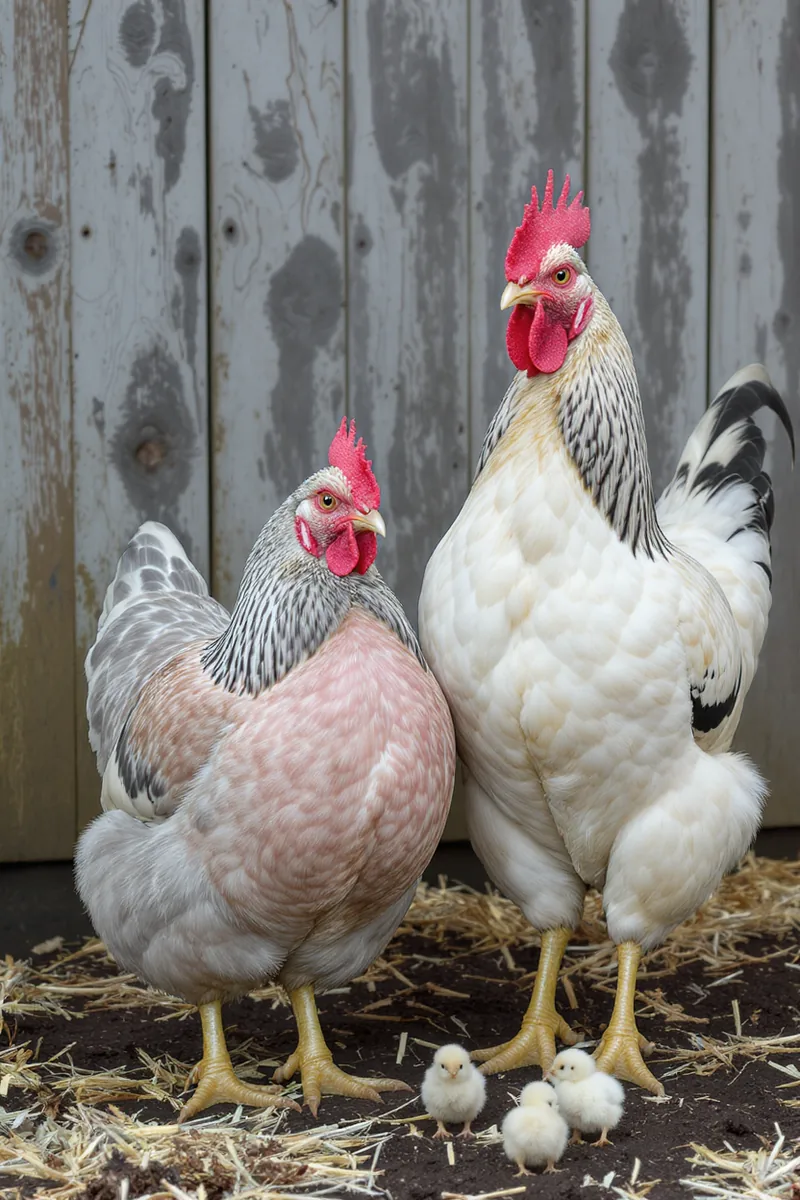
The Cream Legbar is a British autosexing breed that lays pale blue to blue-green eggs. It carries a neat crest and a single comb, and it is one of the very few chickens where you can tell pullets from cockerels the day they hatch.
The breed was developed at Cambridge in the 1930s and 40s by Reginald Punnett and Michael Pease, and the Cream variety was standardized in 1958. Blue eggs are usually credited to the Araucana — the Legbar is a separate British bird: crested, tailed, single-combed.
Legbars are alert, active and outstanding foragers, which suits a free-range yard in Kakheti well. They handle cold without trouble, though the single comb needs looking after in hard frost.
| Hen weight | 2.0–2.7 kg |
| Rooster weight | 2.7–3.4 kg |
| Egg color | Pale blue |
| Eggs per year | 180–200 |
| Egg weight | 55–60 g |
| Temperament | Active |
| Cold hardiness | Good |
| Broodiness | Very low |
| Purpose | Egg-laying |
| Maturity (months) | 5–6 |
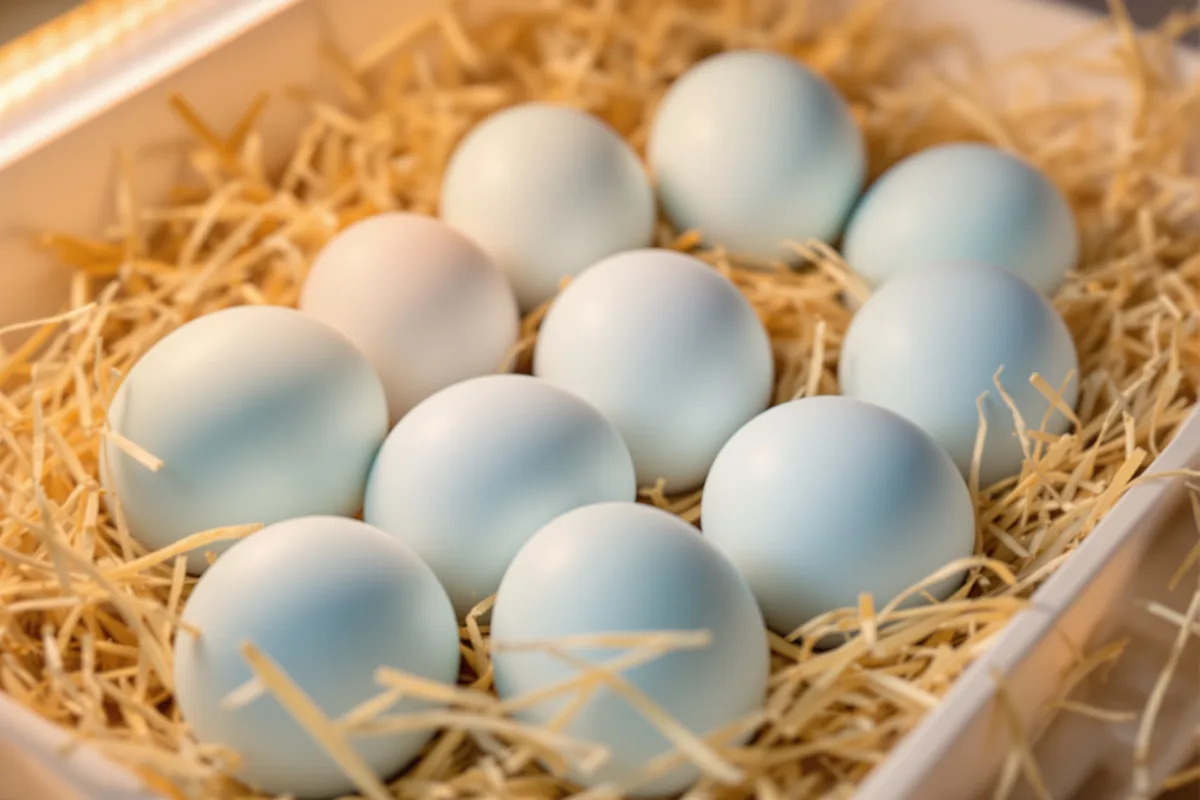
Cream Legbar hens lay around 180–200 eggs per year. The shells are pale blue to blue-green and the eggs are medium to large (55–60 grams). The color is genetic — it runs right through the shell. Laying starts at about 5–6 months.
Incubation: 21 days at 37.5°C, humidity 55–65%. Legbars rarely go broody, so plan on an incubator or a broody hen of another breed.
Cream Legbar care is straightforward, with a few points worth knowing:
Jishiani Guli offers Cream Legbar hatching eggs and three-week-old chicks from our family farm in Lagodekhi, Kakheti. The birds are raised on free range, and hatching eggs are collected fresh and shipped anywhere in Georgia.
Newly hatched females have bold dark stripes down the back and a clear stripe running from the beak through the eye. Males are lighter, with a pale spot on the crown. The difference shows in the first hours after hatching — no vent sexing needed.
Yes. The shell is pale blue to blue-green and the color is genetic — it goes through the shell and does not wash off. The exact shade varies slightly from hen to hen.
At about 5–6 months. Expect roughly 180–200 eggs a year, and because they rarely go broody, production stays steady.
Yes — hatching eggs are collected fresh and sent nationwide, packed for transport. Three-week-old chicks are collected at the farm in Lagodekhi. Call: +995 591 515 082.