Jishiani Guli Crosses
Our own crosses — hybrid vigour, bigger birds, a basket of coloured eggs
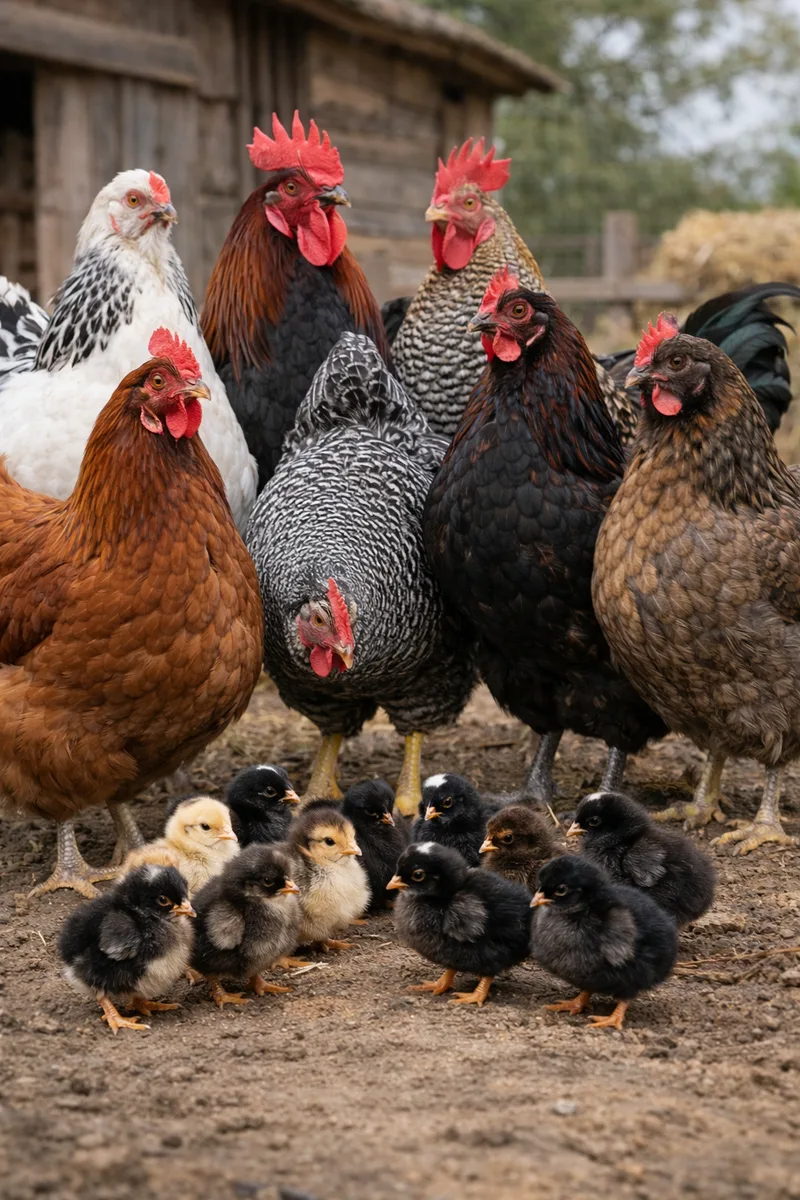
Our own crosses — hybrid vigour, bigger birds, a basket of coloured eggs
Jishiani Guli Crosses are our own farm crosses, bred here in Lagodekhi from the breeds we keep in our own flock. Rather than buying in ready-made hybrids, we cross our own parent stock to produce birds that benefit from hybrid vigour — first-generation crosses that are hardier and more productive than either parent, and that outperform them in the yard.
The Olive Egger is one such cross, bred for its green eggs. Another is our Brahma and Rhode Island Red cross, which gives a large, fast-growing bird that is also a decent layer. Brahma crossed with Jersey Giant produces a huge and genuinely beautiful bird. Alongside these we run a number of surprise crosses that yield a rainbow of different coloured eggs and an interesting mix of qualities.
We breed deliberately towards one goal: a larger bird that lays a colourful egg, is docile to handle and still lays well. Every year brings new genetics into the flock, and with them new breeds and new crosses.
| Hen weight | — |
| Rooster weight | — |
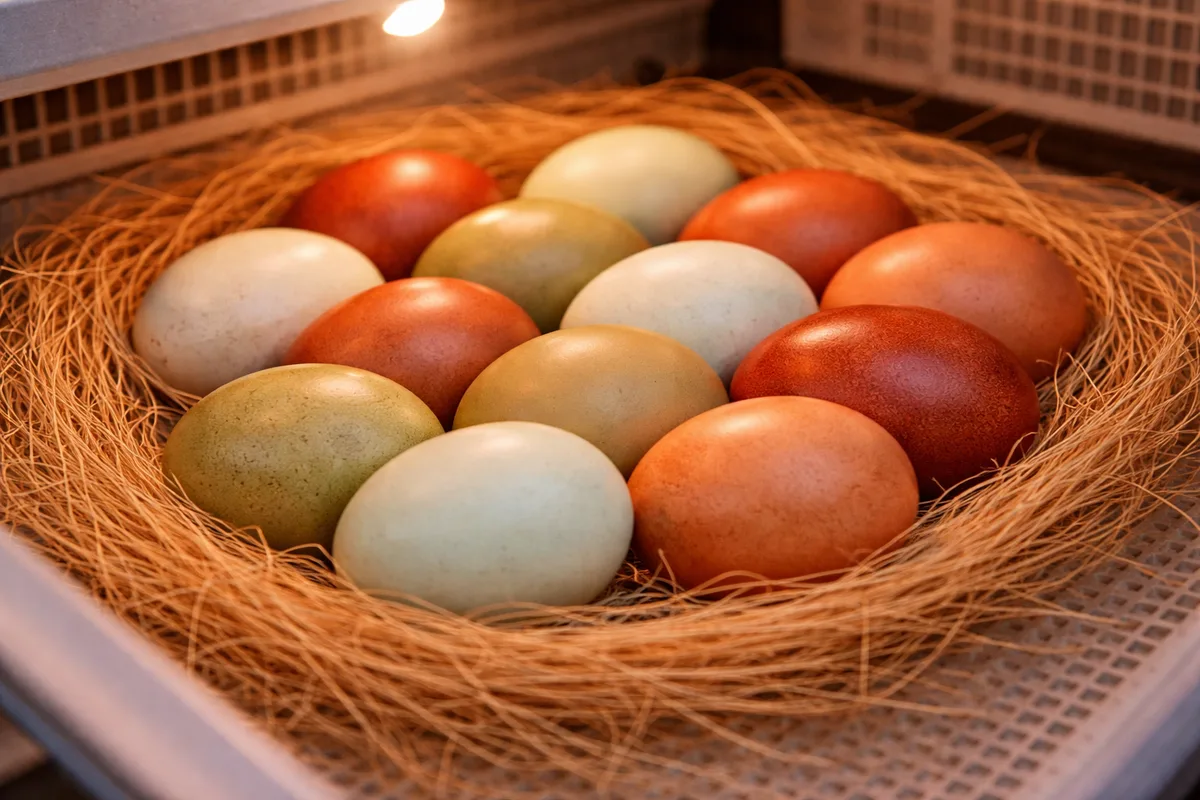
| Egg color | Blue, green, olive, brown, cream |
| Eggs per year | Varies by cross |
| Egg weight | — |
| Temperament | Docile |
| Cold hardiness | Very good |
| Broodiness | Varies by cross |
| Purpose | Dual-purpose |
| Maturity (months) | Varies by cross |
Egg colour is the most visible reward of crossbreeding. Depending on which breeds stand behind each bird, our crosses lay blue, green, olive, brown and cream eggs — a mixed basket rather than a uniform one.
Because every cross carries its own combination of shell-pigment genes, we cannot promise one specific colour from one specific hatching egg. What we can promise is variety: a mixed order will usually give you several different egg colours across the birds that hatch from it.
Crossbred birds are among the easiest chickens to keep, because hybrid vigour does much of the work for you:
These crosses do not exist anywhere else. They are made here, from our own parent flock, and the combinations shift as the flock does — so you get the current year's genetics rather than a fixed catalogue bird.
We hatch to order. Tell us whether you are after maximum size, the widest spread of egg colours, or a balance of the two, and we will select the parent pens accordingly.
A cross bred on our own farm from the pure breeds in our flock, selected for hybrid vigour: a larger, hardier bird that also lays well.
Blue, green, olive, brown or cream, depending on which breeds stand behind each bird. A mixed order usually produces several different colours.
For a working backyard flock, often yes. First-generation crosses usually outperform both parents in growth, hardiness and laying. Purebreds remain the better choice if you want to breed birds that come true to type.
Not always, and that is part of the appeal. Size and temperament are fairly predictable because we select for them, while feather colour and egg colour vary from bird to bird.