White Turkey
White plumage, big frame — a turkey that breeds naturally
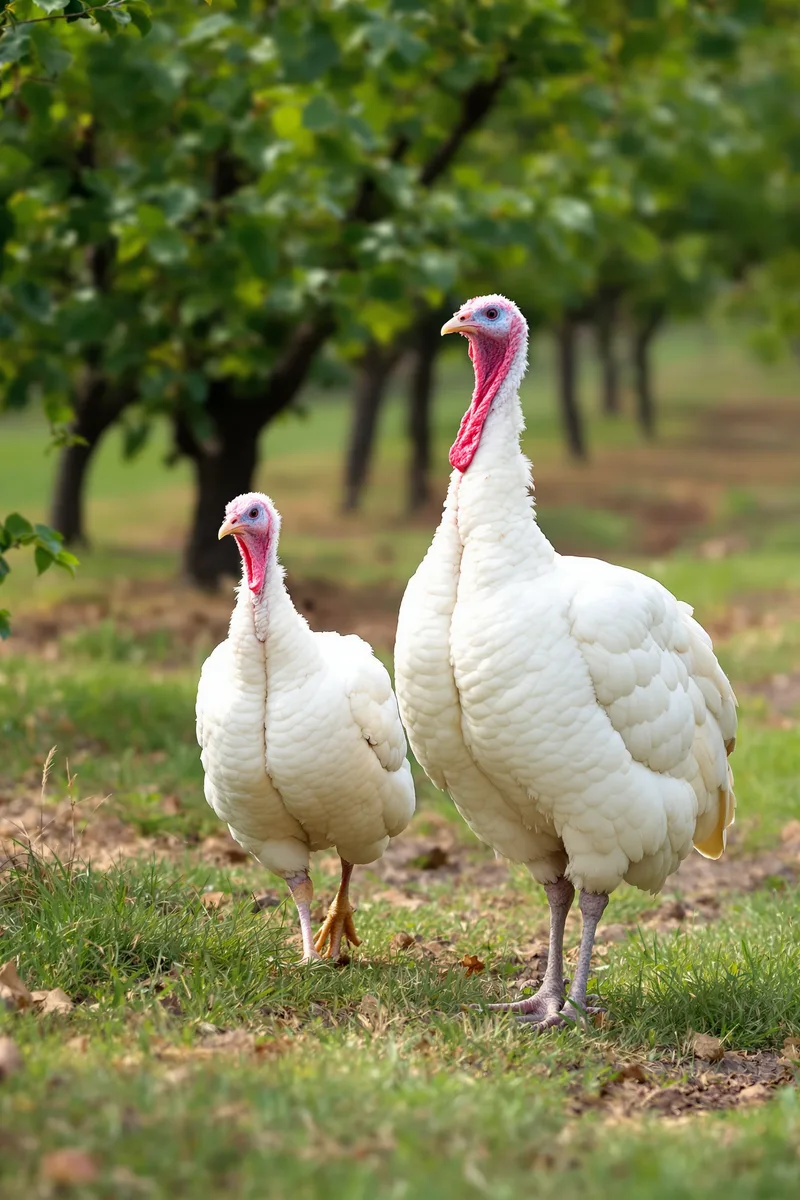
White plumage, big frame — a turkey that breeds naturally
Our white turkey is a white-plumaged bird that breeds naturally and is not a commercial broiler hybrid. Adult toms reach about 12 kg and adult hens about 8 kg.
We do not put a breed name on this bird, because we do not know it for certain and will not invent one. What we do know: the plumage is pure white, the birds mate and breed naturally, and unlike broiler hybrids you are not tied to buying new hybrid stock every year to get poults.
One honest point before you buy: a turkey asks more of you than a chicken — more space, more feed, more patience. Poults are especially sensitive to cold and damp in their first weeks, but a grown bird is hardy, forages well and is easy to keep in a farmyard.
| Weight (hen) | ca. 8 kg |
| Weight (tom) | ca. 12 kg |
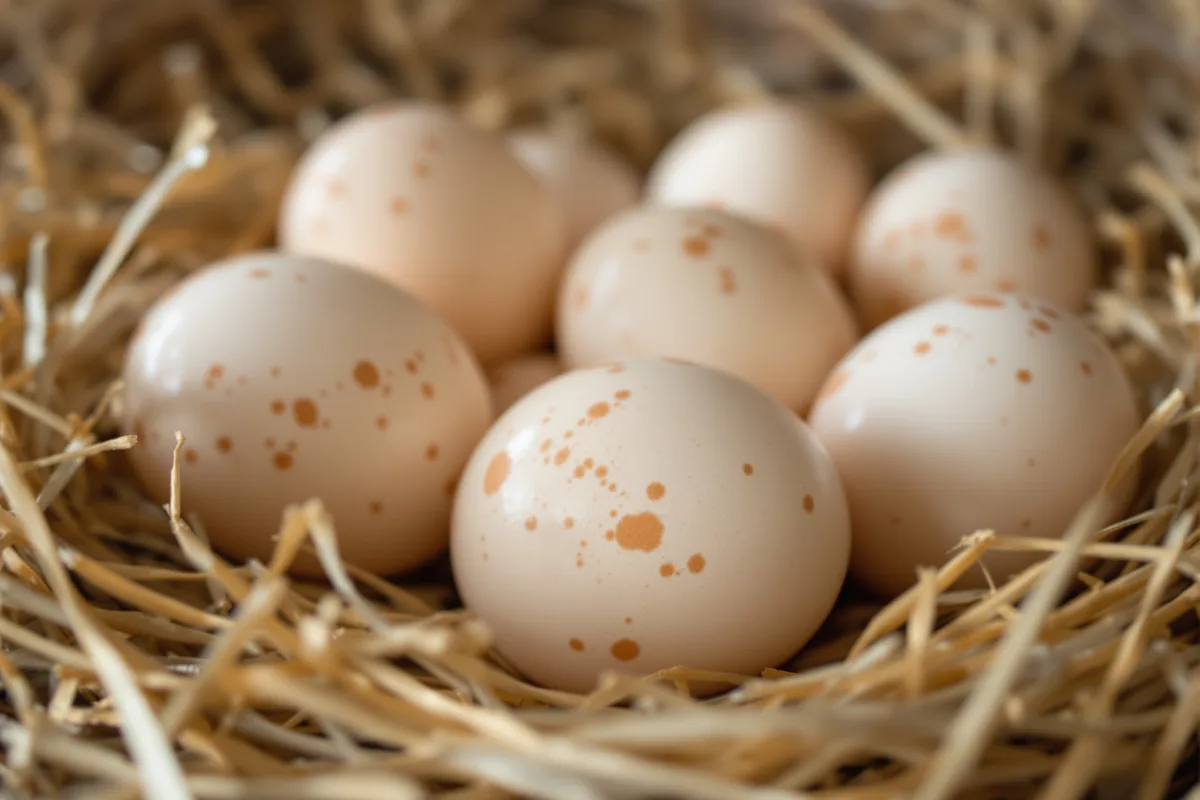
| Egg colour | Cream with brown speckles |
| Eggs per year | — |
| Egg weight | — |
| Temperament | Sociable, curious |
| Cold hardiness | Good |
| Broodiness | — |
| Purpose | Meat |
| Maturity (months) | — |
Turkey eggs are larger than chicken eggs, cream to pale buff with fine brown speckles. Hens usually start laying in spring and carry on through the summer; we do not quote a fixed yearly figure, because it depends heavily on feed and daylight.
Incubation: about 28 days at 37.5°C, humidity 55–60% (65–70% for the last 3 days). We ship freshly collected eggs across Georgia; keep them cool until setting and do not hold them longer than 7 days.
With white turkeys, care comes down to the first weeks of the poults and a dry shelter:
Jishiani Guli offers white turkey hatching eggs and 3-week-old poults from Lagodekhi, Kakheti. The birds are raised on free range, hatching eggs are shipped freshly collected across Georgia, and poults are collected from the farm.
Adult toms reach about 12 kg and hens about 8 kg. The birds are not broiler hybrids, so they grow more slowly than commercial lines.
We do not name a breed because we do not know it. What we know: white plumage, not a commercial broiler hybrid, and it breeds naturally.
About 28 days at 37.5°C. Raise humidity to 65–70% for the last three days.
Poults are more sensitive in the first weeks: they need more warmth, more protein (turkey starter) and dry bedding. Adult birds are hardy and forage well.