Jersey Giant
The largest chicken breed there is — calm, heavy, winter-hardy
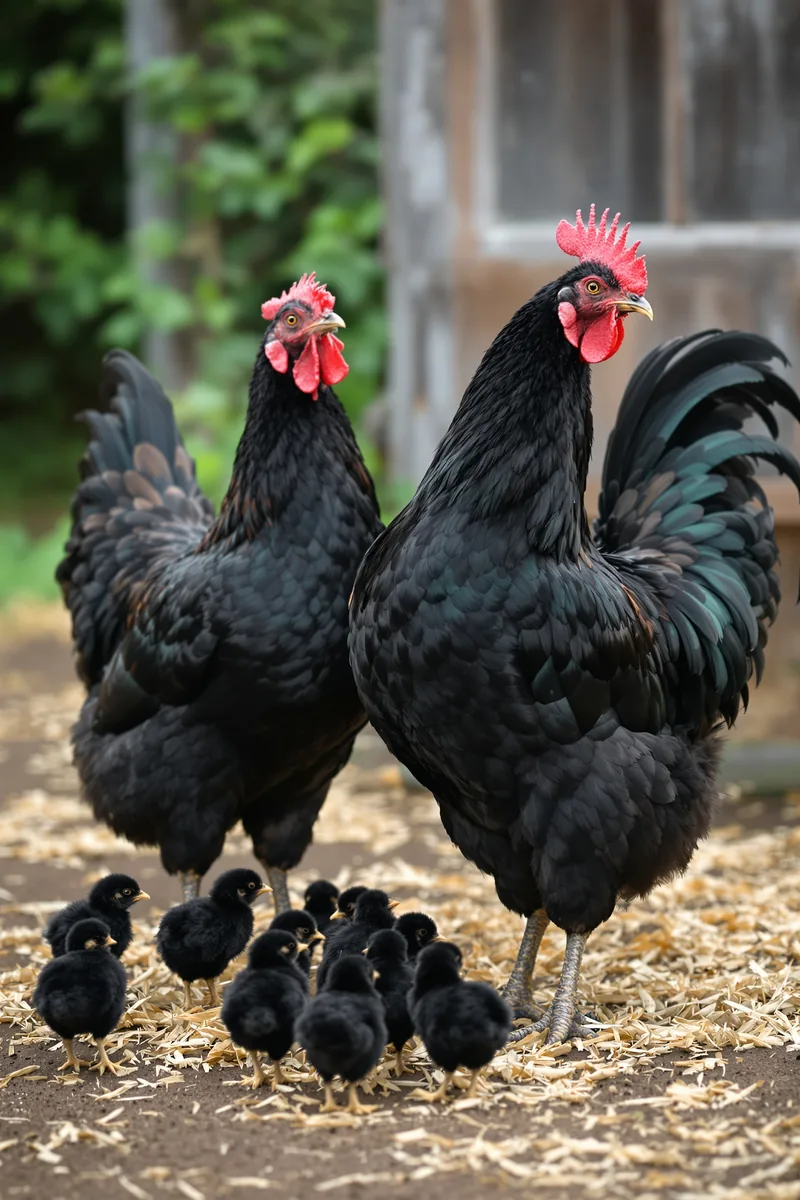
The largest chicken breed there is — calm, heavy, winter-hardy
The Jersey Giant is the largest purebred chicken in the world. Roosters reach 5.4–6.8 kg and hens 4.5–5.0 kg, and even at that size the birds are famously calm and easy to handle.
The breed was created in New Jersey between the 1870s and the 1890s by John and Thomas Black, who crossed Black Java, Black Langshan and Dark Brahma with one goal: a home-raised bird big enough to replace a roasting turkey. The American Poultry Association recognized it in 1922.
Two honest points before you buy. The Jersey Giant grows slowly — 8 to 9 months to table weight, and often 8 months to a year before a pullet lays her first egg, with modest feed conversion along the way. And it is built for cold, not for heat: it lays well through winter but struggles in a hot Kakheti summer, so deep shade and constant water are not optional.
| Hen weight | 4.5–5.0 kg |
| Rooster weight | 5.4–6.8 kg |
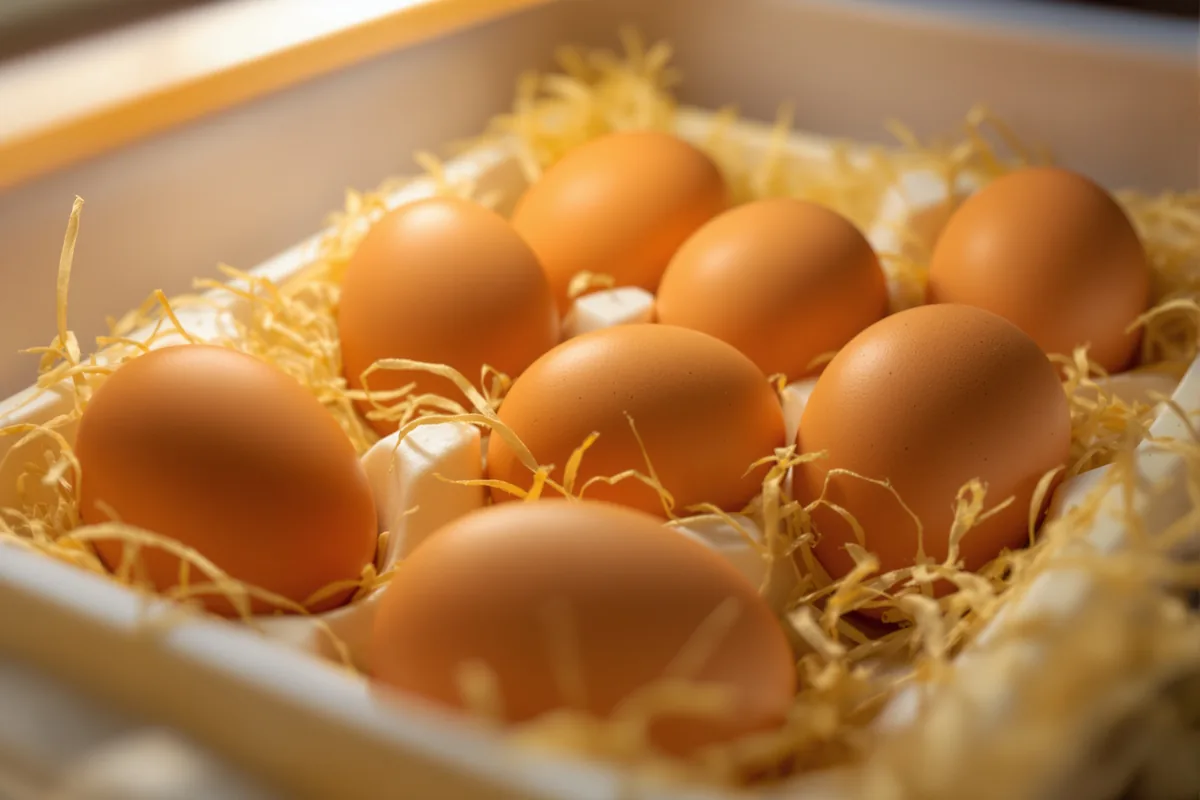
| Egg color | Light cream to brown |
| Eggs per year | 150–200 |
| Egg weight | 65–75 g |
| Temperament | Calm |
| Cold hardiness | Excellent |
| Broodiness | Low |
| Purpose | Dual-purpose |
| Maturity (months) | 8–12 |
Jersey Giant hens lay 150–200 large to extra-large eggs a year, light cream to brown. Eggs run 65–75 grams, and for a hen this size the nest boxes need to be roomy and set low.
Laying starts late — usually between 8 months and a year. In exchange you get a good winter layer that keeps producing when lighter breeds stop. Incubation: 21 days at 37.5°C, humidity 55–65%. Chicks hatch in black down with a pale yellow patch running from the chin down the belly, and yellow feet.
With the Jersey Giant, care comes down to size and heat:
Jishiani Guli offers Jersey Giant hatching eggs and three-week-old chicks from our family farm in Lagodekhi, Kakheti. The birds are raised on free range, and hatching eggs are collected fresh and shipped anywhere in Georgia.
Roosters reach 5.4–6.8 kg and hens 4.5–5.0 kg — the largest purebred chicken there is. Full size takes 8 to 9 months, and the frame keeps filling out into the second year.
Late — usually between 8 months and a year, later than most breeds. After that they lay 150–200 large eggs a year and keep going through the winter.
Winter is no problem — this is one of the most cold-hardy breeds there is. Heat is harder: the birds are heavy and densely feathered, so a Kakheti summer calls for deep shade, ventilation and constant water.
It gives a lot of meat, but slowly — 8 to 9 months to table weight, with modest feed conversion. It suits a household raising its own birds rather than anyone chasing broiler economics.